
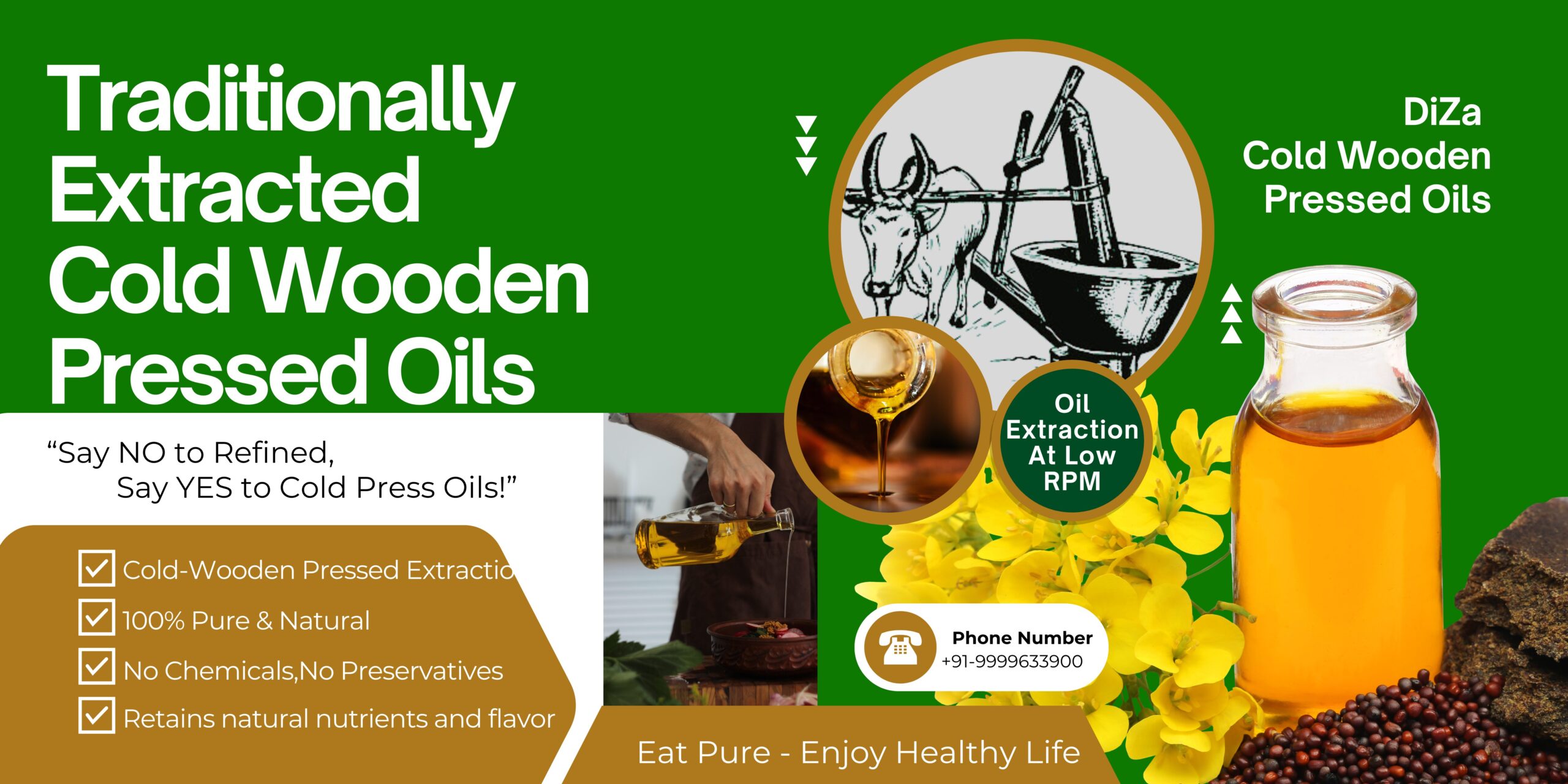
Why Cold-Pressed Oils Are Gaining Popularity?
After the COVID pandemic, people have become more health-conscious, and an increasing number of people are opting for natural cooking oil options. One such healthy and traditional choice is cold-pressed oil—a chemical-free, nutrient-rich oil that has been used in Indian households for centuries.
What is Cold-Pressed Oil?
Cold-pressed oil is extracted using a slow, mechanical pressing method at room temperature. This method does not involve heat, chemicals, or preservatives, making it a natural and healthy oil option. This Oil is also known as wooden-pressed oil or Chekku oil in India, and retains all the nutrients, antioxidants, and aroma of the original seeds. We take pride in saying that at Shri Balaji Agro, we extract 100% pure and natural cold-pressed oils using the traditional method of oil extraction. Which we offer to the health-conscious society by the brand name of Diza Cold-Wooden-Pressed Oil.
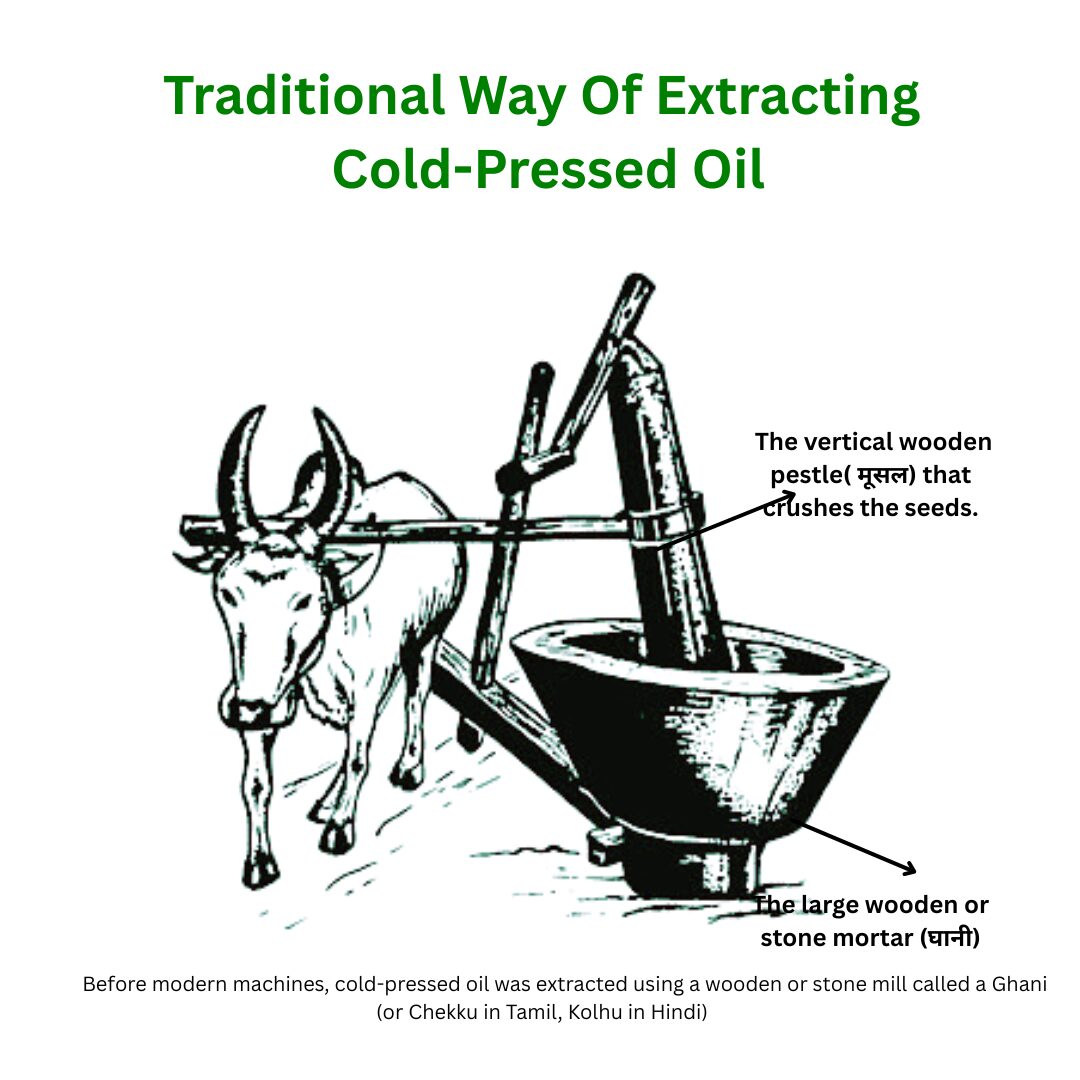
Traditional Cold-Pressed Oil Extraction Using Ox (Bull)
Before the advent of modern machines, cold-pressed oil was extracted using a wooden or stone mill called a Ghani (or Chekku in Tamil, Kolhu in Hindi). Here’s how it worked:
The Process:
The Setup:
A vertical wooden or stone drum (the Ghani) was set up with a central wooden pestle. Seeds like mustard, sesame, groundnut, or coconut were placed inside the drum.- Powered by Ox:
A bull (ox) was tied to a long wooden arm connected to the central wooden pestle. As the ox walked in circles, they slowly rotated the wooden pestle inside the drum. - Cold Extraction:
This rotating motion slowly crushed the seeds without any external heat. This slow process ensured that the natural oils were released while retaining nutrients, aroma, and flavor. - Filtration:
The extracted oil was allowed to settle naturally, and solid particles (oil cakes) were separated manually or by using a simple cloth filter.
Why This Method Was So Effective?
Low Temperature: As the entire extraction took place at low RPM and room temperature, so no heat was generated there resulting in no loss of nutrients or flavor.
No Chemicals: Only physical force and natural pressure were used for oil extraction; no chemicals were used in the process.
Sustainable: Eco-friendly, using physical power and natural tools.
Local and Fresh: Oils were made in small batches for immediate use, often in village communities.
At our oil extraction unit, we take extreme care of all the above-mentioned parameters & conditions to prepare 100% nutrition-rich, pure, and natural oil, and similarly filter this oil through fine clothes before packing it for our dear customers. This entire traditional process of oil extraction, filtration, and packaging makes Diza cold-pressed oil a trusted brand in the health-conscious society.
🔥 Order Fresh Cold-Wooden-Pressed Oils Now on WhatsApp
Cold-Pressed vs Refined Oil: A Clear Comparison
| Feature | Cold-Pressed Oil | Refined Oil |
|---|---|---|
| Extraction | Natural pressing (no heat) | High heat and chemical solvents |
| Nutrient Value | High | Low |
| Chemicals | None | Often present |
| Taste & Aroma | Natural | Neutral or bland |
| Health Impact | Supports heart, skin and digestion | May cause inflammation |
Top Benefits of Cold-Pressed Oil in Cooking
1. Preserves Nutrients Like Vitamin E and Antioxidants
Cold-pressed oils contain a good amount of Vitamin E, polyphenols, and Omega-3 fatty acids, which support the immune system and slow down the aging process.
2. Better for Heart Health
Natural oils such as cold-pressed mustard oil and cold-pressed groundnut oil are high in healthy fats, including MUFA and PUFA, which can help lower cholesterol levels.
3. Supports Digestion and Reduces Acidity
Cold-pressed sesame oil and mustard oil are known to help with digestion and can reduce feelings of bloating.
4. Suitable for High-Heat Cooking
Oils like cold-pressed groundnut oil have a high smoke point, making them suitable for cooking methods such as frying and sauteing.
5. Enhances The Flavor of Food
These oils maintain the natural taste and aroma of the seeds, which can improve the overall flavor of the dishes they are used in.
Types of Cold-Pressed Oils and Their Unique Uses
At our processing unit, although we use mechanical machines, all of them are well-equipped with wooden mortars and wooden pestles, and these machines operate with low RPM and extract oil at room temperature, resulting in nutrient-rich, flavor-full, and 100% pure and natural Diza Cold-Wooden-Pressed Oil.
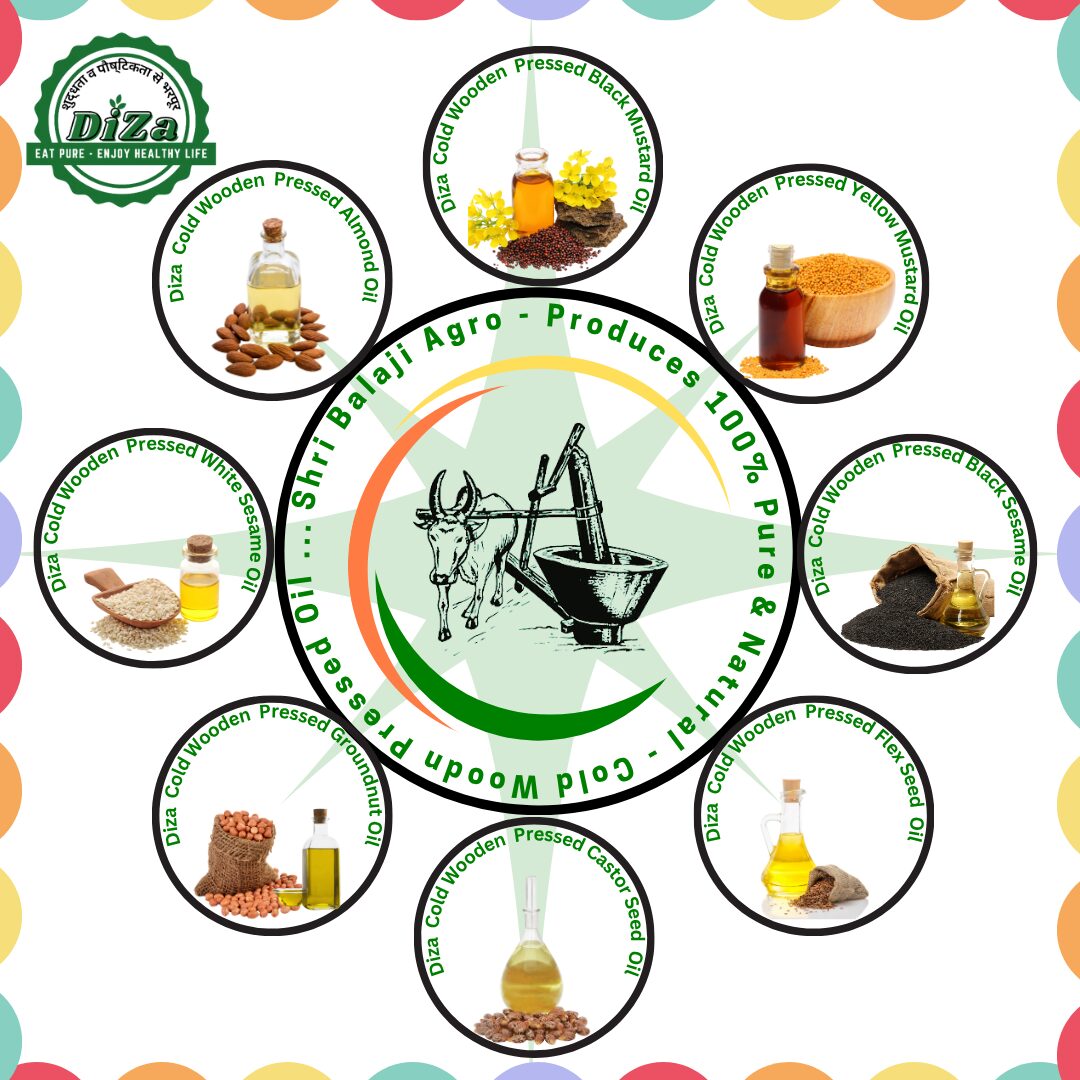
At Shri Balaji Agro, we extract different types of cold-pressed oils, which are mentioned below.
| Oil Type | Best For | Additional Uses |
|---|---|---|
| Diza Cold-Wooden-Pressed Mustard Oil | Indian cooking, frying | Hair oil, massage |
| Diza Cold-Wooden-Pressed Coconut Oil | South Indian dishes | Skincare, baby care |
| Diza Cold-Wooden-Pressed Groundnut Oil | Deep frying | Heart health |
| Diza Cold-Wooden-Pressed Sesame Oil | Asian cuisine, pickles | Ayurvedic massage |
| Diza Cold-Wooden-Pressed Almond Oil | Raw use, desserts | Skin brightening, baby oil |
| Diza Cold-Wooden-Pressed Flaxseed Oil | Health & beauty purposes | Skin, hair, health and dietary |
Non-Cooking Benefits of Cold-Pressed Oils
- Skincare: Almond or coconut cold-pressed oil can be used to keep the skin hydrated and have a healthy glow.
- Haircare: Cold-pressed mustard or castor oil is beneficial for promoting hair growth and maintaining a healthy scalp.
- Baby Massage: Cold-pressed coconut and almond oils are gentle and safe options for baby massage.
- Oral Detox: Cold-pressed coconut or sesame oil can be used for oil pulling to help detoxify the mouth.
- Ayurveda: These cold-pressed oils are commonly used in detox treatments and for body massages as part of traditional Ayurvedic practices.
How to Identify Pure Cold-Pressed Oil
- Look for labels like “cold-pressed,” “wooden pressed,” or “kachi ghani”.
- Check for natural aroma and slightly cloudy texture.
- Prefer glass, tin, or food-grade PET bottle packaging.
- Avoid oils with added color or fragrance.
Storage Tips for Cold-Pressed Oils;
- Store in cool, dry places away from sunlight.
- Use within 3–6 months of opening.
- Keep the lid tightly closed to avoid oxidation.
Are There Any Limitations?
Cold-pressed oils have a shorter shelf life.
Slightly more expensive than refined oils.
Not suitable for very long cooking durations in some cases.
Should be used in moderation (like all oils)—2–3 teaspoons/day per person.
Environmental & Social Impact
Supports local farmers and small manufacturers.
The extraction process uses less electricity, and there is no use of chemicals.
Leftover oil cake is used as organic manure or cattle feed.
Frequentaly Asked Questions
Is cold-pressed oil and cold-wooden-pressed oil the same?
Yes, when we talk about purpose and benefits, both are cold-pressed oils and retain nutrients.
But:
Cold-wooden-pressed oil is a more traditional and slower method that is often seen as purer.
Modern cold-pressed oil extraction units may use metal (mortar and pestle) machinery with higher RPM, which allows for a faster extraction process, but it can be slightly more prone to frictional heat.
The oil needs to be extracted at a low RPM and room temperature.
Is cold-wooden-pressed oil good for health?
Yes. It contains natural nutrients, antioxidants, and is free from harmful chemicals found in refined oils.
Can we use cold-wooden-pressed oil daily?
Undoubtedly, first ensure it is pure; if it is pure, then one can consume it in moderation.
Is cold-wooden-pressed oil suitable for frying?
Yes, especially mustard and groundnut cold-wooden-pressed oils, which have a high smoke point.
Which is the best cold-wooden-pressed oil for skin?
Almond and coconut cold-pressed oils are excellent for skin hydration and glow.